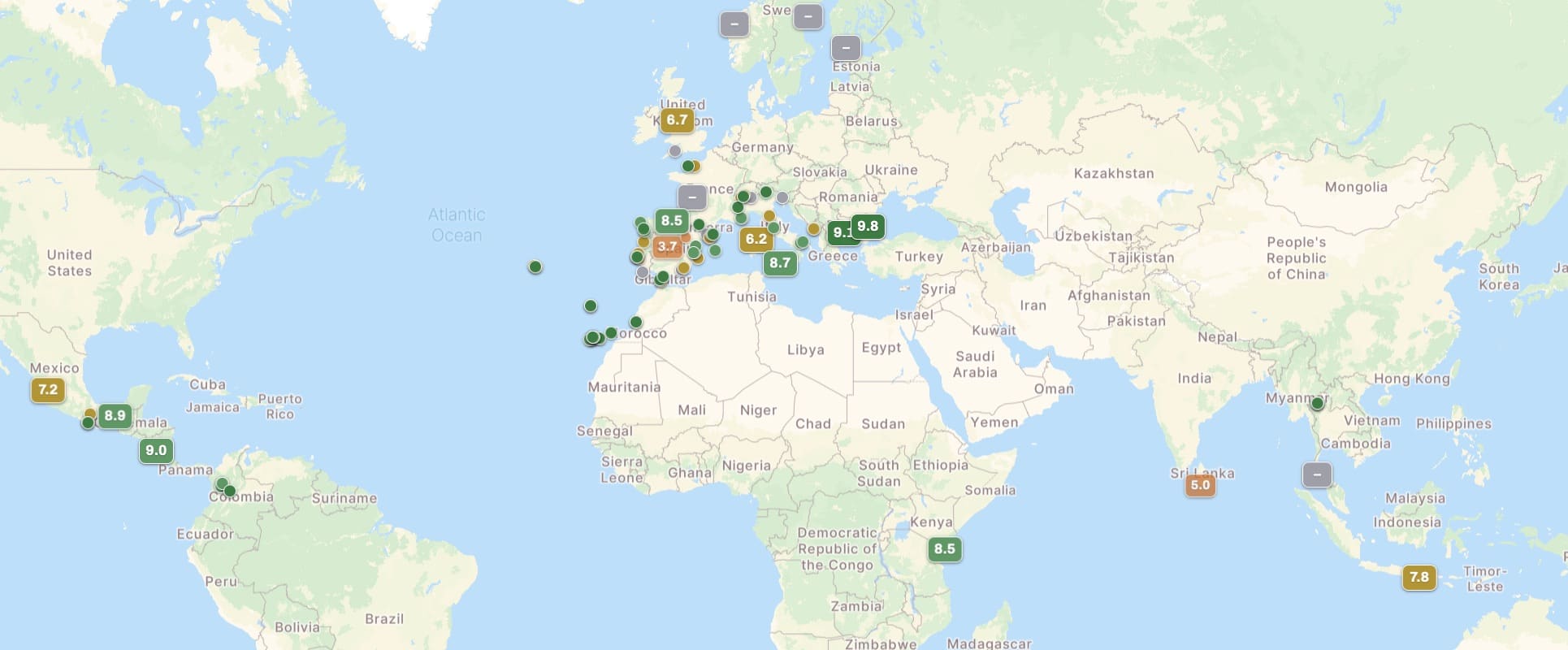
The ratings measure how well a coliving supports both remote work and community. Using AI, we extract facts and recurring themes from the coliving’s website and guest reviews, then score it 1–10 across 7 categories.
Rubric
Our rubric evaluates each coliving across 7 categories:
- Community strength: Do guests form friendships and do things together? Do they extend their stays or come back?
- Community facilitation: Do hosts actively bring people together rather than just provide good service? Are there regular shared dinners, house events, or group outings?
- Communal areas: Are there shared spaces for working, eating, and relaxing that pull guests together? Does the whole house naturally gather, or does the layout keep people apart?
- Workspace: Is there a dedicated place to work with comfortable seating and somewhere to take calls? Is the wifi fast and reliable?
- Kitchen & food: Can guests easily feed themselves — a well-equipped kitchen, affordable food nearby, or meals provided? Do people cook and eat together?
- Living conditions: Is the house clean, well-maintained, and comfortable? Any issues with hot water, temperature, laundry, or noise between rooms?
- Sleep: Do guests sleep well, with comfortable beds and quiet nights? Any recurring problems with noise, bedding, or insects?
(These are examples of the criteria we evaluate. We have not yet published the full rubric.)
We continuously refine both the rubric and the rating process, and re-rate colivings every 3–6 months.
Why our ratings differ from other platforms
While the term coliving is loosely defined and includes many types of shared living arrangements, on Colivium we try to rate all colivings against a common definition. As a result, a property can be highly rated on other platforms but still receive a lower rating on Colivium if it falls short on the aspects of coliving we consider important.
But this definition isn’t necessarily what every remote worker is looking for – a lower score on Colivium doesn’t mean a coliving is bad. It may just cater to a different type of guest. For example, a coliving in a large city may not need to provide a workspace or facilitate community because guests can easily find coworking spaces, events, and social opportunities nearby.